
Printing technology determines the appearance, feel, and functionality of your label on a bottle, product box. Picking the appropriate printing method has cost, speed, colour accuracy, durability, and shelf appeal considerations for label manufacturers in India, where a run may be a few hundred to millions. It is a blog on the key Different Types of printing technologies (what they are, where they excel, advantages and disadvantages), outlines what methods are most frequently used by label-makers, and how a professional label company can transform these technologies into completed high-quality labels that are regulatory and branding compliant. References and industry best practices have been added.
The label matters in printing technology. To provide background information about the decisions and trade-offs in the selection of the printing technology to execute any label job, such as the cost per unit, speed, colour, durability, and substrate.
Flexo plates are made of flexible material, and the pressurising rollers (cylinders) that apply the pressure to the plate are fast-rotating. It’s the workhorse of many label and packaging jobs because it accommodates a wide range of substrates and offers strong medium-to-large volume run economics.
Gravure, the plate is an engraved cylinder which picks up the link this is best for very long runs, high-quality printing with deep, consistent colour saturation.
Offset prints the image from plate → rubber blanket → substrate, and allows very high resolution — it’s traditionally strong for paper labels and cartons.
Digital printing applies ink or toner to the media directly from digital files, with no need for plates, great for short runs, proofs, and variable data printing (QRs, barcodes).
Screen printing is a technique that uses a mesh stencil through which ink is passed. It is ideal for thick, vibrant inks and special effects like texture or metallics.
Thermal processes are the result of the use of heat, either to react with the heat-sensitive raw material, such as in thermal processing of food or thermal pressing of plastics, or to transfer heat using a ribbon, as in printing bar codes, logistics, and short-mail labels. What is it Direct thermal media is black when it is heated; thermal transfer uses heat to melt wax or resin-based ink from a ribbon onto the substrate.
Metallic foils, embossed logos, spot UV, or matte lamination add a premium look and feel. These finishing processes are applied post-press to enhance shelf appeal.
To provide a context of how label producers select technology, they consider the run length, the substrate, the cost, the colour requirements, and any regulatory and/or lifecycle constraints.
The full process for professional labels: consult → material and print choice → proofing → printing → finishing → QC → delivery.
1. Brief & consultation: Know product, environment (fridge, oil, outdoors), reg requirements & quantity. (Inquire about adhesive, food-contact approvals.)
2. Material selection: select face stock (paper, BOPP, PET), adhesives (permanent, removable, freezer), and liners. Good manufacturers will test substrates for performance.
3. Print method recommendation: Professional printers recommend flexo/digital/thermal/gravure according to run-size and finish requirements.
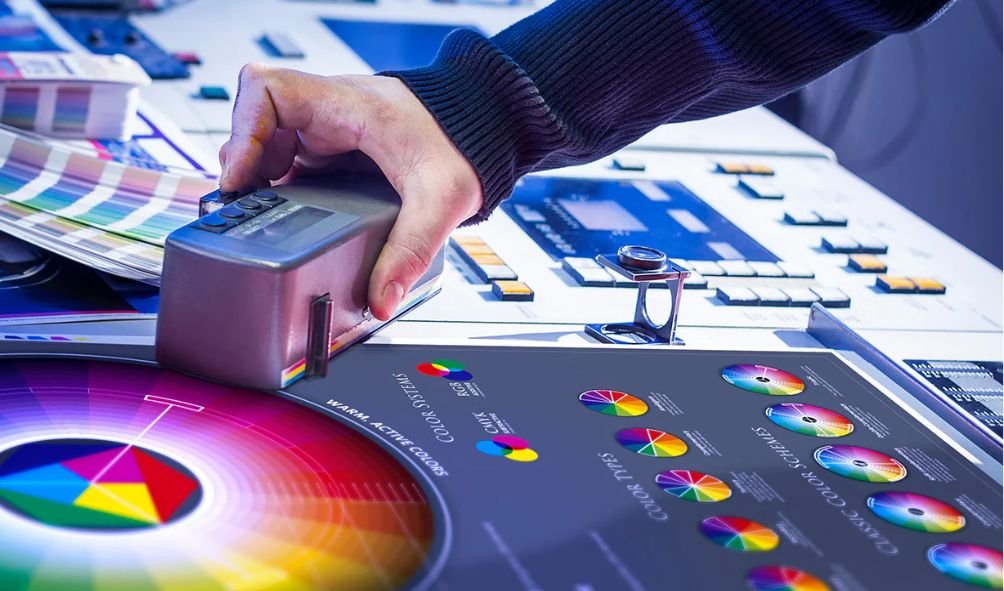
4. Proofing & color match: Soft proof and physical sample (press proof) Brand color approval. Color management (ICC profiles) helps to minimize surprises.
5. Printing & finishing: Process your chosen print technique, then varnish /laminate, foil, emboss , and die-cut on rewind.
6. Quality control: Registration, adhesion, barcode(UPC,EAN) scanning, and visual defects. Dependable factories record QC and provide traceability.
7. Packaging & delivery: Slit, rewind, and pack the labels in rolls or sheets ; arrange for logistics within India (crucial for timely FMCG launches).
Sustainability and good first decisions are money savers. Select the correct substrate, printing technology, and finish; organise SKUs to minimize changeovers and waste.
Prakash Labels is a decades-old Indian-based label manufacturer specialising in the provision of adhesive labels, RFID and auto ID solutions, and customised label services in any industry. They offer end-to-end label solutions, including substrate recommendations up to finishing and pan-India delivery and support, customise clear-on-clear labels, FMCG bottle labels, and industrial/technical labels. Prakash Labels can guide label buyers who are interested in having a partner who is familiar with Indian markets, supply chains, and compliance with the appropriate printing technology of your product.
Printing technology is not universal. The most optimal label choice is the one that provides a balance between run-length, substrate, and artwork complexity, durability, and cost. On short runs, digital offers flexibility, flexo works on the medium-high volume scale, gravure on huge, high-end runs, and thermal processes in the logistics and barcode sector. Partner with a label company that does sample work, provides proofs, and suggests finishes that ensure you have how you get labels that look good, hold up, and protect your brand on store shelves and shipping.
1. What printing method is best for small label batches?
There are no plates in digital printing, the setup cost is low, the turnarounds are fast, and it allows for customization of data. Works well for prototypes and several SKUs.
2. Which method gives the most durable labels for outdoor use?
Thermal transfer with appropriate ribbons or UV-curable inks plus lamination/film can be more resistant to heat, water, and scratching.
3. Is flexographic printing good for food and beverage labels?
Yes, flexography can be applied to FMCG production for many of the substrates used for food/beverage. It is efficient in medium-to-large runs.
4. Can digital printing match flexo colours?
Digital has come on in leaps and bounds. For the short run, it is very close, but some very specialist PMS/metallic effects may still need flexo, offset, or special finishing.
5. What’s the difference between direct thermal and thermal transfer?
Direct thermal prints on heat-sensitive stock and fade with time; Thermal transfer uses a ribbon for more enduring, stronger prints.
6. How should I pick a label manufacturer?
Pick one who can test substrates, provide press proofs, explain finishing options, and suggest the right print technology for your budget and product requirements.