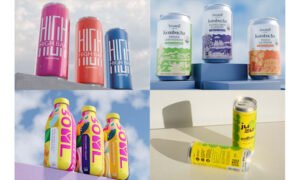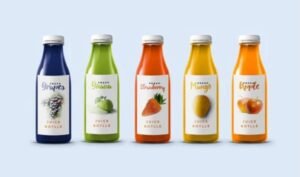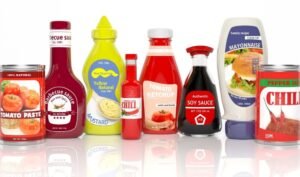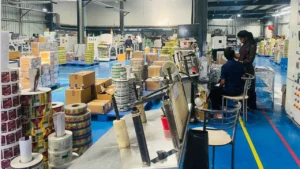
If a label peels off a chilled bottle in a cold room, smudges under a chemical wash, or curls on a squeezable shampoo bottle, the problem usually traces back to one decision made weeks earlier: the face stock. This label material selection guide is built for packaging and procurement managers who have to match a substrate to a real application, not a brochure. We will compare paper, BOPP, PE, PET/polyester and vinyl, line them up against adhesive classes and print methods, and give you a decision framework you can apply before you raise a single purchase order.
Prakash Labels has been engineering this exact trade-off for Indian manufacturers for over 30 years, including a documented project for Paytm where labels kept peeling off the glass doors of shops until the team developed a film that could survive the temperature swings at an optimised cost. That is the lens here: spec first, aesthetics second.
Start with the harshest condition the label will face, then pick the cheapest material that survives it. Most labelling failures come from over-indexing on print quality and under-indexing on the environment. Rank your application by moisture, chemical contact, heat, cold-chain exposure and abrasion, find the most demanding of those five, and let it set the floor for your face stock. Everything else, finish, colour, shape, is a layer you add on top of a material that already survives.
That order matters because a face stock that fails in the field is a total loss: reprint cost, re-labelling labour, rejected shipments and, in regulated sectors like pharma, compliance exposure. A material that costs 30 percent more but never fails is almost always cheaper over the life of the batch.
Before comparing materials, score your application against these five stressors. One dominant stressor usually decides the material outright.
Moisture and water immersion: bottles, beverages, chilled drinks, bathroom products. Paper fails fast here; you need a film.
Chemical and solvent contact: agrochemicals, lubricants, industrial cleaners, cosmetics with oils. This is where polyester separates from the pack.
Heat and sterilisation: engine-bay parts, electronics, autoclaved or steam-cleaned items. Heat is polyester territory.
Cold chain and freezer: frozen food, pharma cold storage, refrigerated logistics. Here the adhesive matters as much as the face stock.
Abrasion and outdoor wear: drums, crates, asset tags, anything handled roughly or exposed to UV and rain. Polyester and vinyl lead.
Paper is the cheapest face stock and prints beautifully, which is why white gloss paper remains the default for dry FMCG cartons and short-shelf-life food. It has no meaningful resistance to water, oil or abrasion. Use it where the label lives indoors and dry, and nowhere near a chill cabinet.
BOPP (biaxially oriented polypropylene) is the workhorse film. It is thin, strong, recyclable and resistant to water and oil, and it will not shrink or expand with normal temperature changes. Industry pricing data puts BOPP at roughly two to three times the cost of paper, which is the premium you pay to move from “indoor and dry” to “wet, oily and handled.” Clear BOPP also delivers the no-label look that personal-care and beverage brands want. Its limit is aggressive chemicals and sustained high heat, where it gives way to polyester.
PE (polyethylene) is the conformable film. Its defining property is flexibility: it hugs high-contour and squeezable containers, liquid soap, shampoo, gels, without cracking or wrinkling when the bottle is squeezed. PE is moisture-proof and holds up well to light and temperature, which is why it dominates flexible-packaging and squeeze applications. If your container deforms in the user’s hand, PE is usually the answer; rigid films like BOPP and PET can lift or crease on those surfaces.
PET / polyester is the durability ceiling for printable film. It resists high heat, abrasion, solvents and UV better than any other common label material, and it holds its dimensions under stress where BOPP would stretch slightly. That makes polyester the right call for autoclaving, steam sterilisation, engine-compartment parts, electronics, chemical drums and asset tags meant to last years. It is also the most expensive of the films, so you reserve it for genuinely rugged applications rather than spending the budget by default.
Vinyl is the conformable, weather-resistant outdoor specialist, prized for durable signage, drum labels and curved surfaces that also face the elements. It bridges flexibility and outdoor toughness, though polyester usually wins on pure chemical and heat resistance.
Property | Paper | BOPP | PE | PET / Polyester | Vinyl
Relative cost | Lowest | 2-3x paper | Moderate | Highest film | High
Moisture resistance | Poor | Excellent | Excellent | Excellent | Excellent
Chemical / solvent resistance | Poor | Good | Moderate | Best in class | Very good
Heat / sterilisation | Poor | Limited | Limited | Excellent (autoclave, steam) | Moderate
Cold / freezer | Poor | Good with right adhesive | Good | Excellent | Good
Abrasion / outdoor | Poor | Good | Moderate | Excellent | Excellent
Conformability (squeeze / curves) | Low | Low-moderate | Highest | Low | High
Clarity (no-label look) | No | Yes (clear BOPP) | Moderate | Yes | Moderate
Best fit | Dry indoor FMCG | Beverage, cosmetics, general wet/oily | Squeezable bottles, flexible packs | Industrial, chemical, electronics, asset tags | Outdoor, drums, signage
A face stock only performs if the adhesive underneath it holds. The adhesive, not the film, is usually what fails in the cold chain. There are three broad classes to specify alongside your material.
Permanent adhesives form a strong, lasting bond for labels that should never come off, the default for compliance, asset and most product labels.
Removable adhesives lift cleanly without residue, used for promotions, returnable assets and temporary identification.
Cold-temperature and freezer-grade adhesives are the ones procurement teams most often get wrong. Standard permanent adhesives can fail to grab if a label is applied to an already-cold surface. Specialised freezer-grade adhesives apply at temperatures as low as around -10°F to -40°F and hold across a service range of roughly -65°F to +150°F, which is what keeps a label on a carton that goes straight from the line into a blast freezer. For cold storage and frozen logistics, specify the adhesive as deliberately as the face stock.
For squeezable and high-contour packs, pair a conformable PE or vinyl face stock with a flexible adhesive so the label moves with the container instead of lifting at the edges.
The material constrains the printing process, so decide them together. Prakash Labels runs flexographic, screen and digital printing in-house, and each suits different jobs.
Flexographic printing handles long runs across plastic films, metallic films and paper in a single pass that combines printing, varnishing, laminating and die cutting, the cost-efficient choice for high-volume BOPP and PE work.
Screen printing produces highly durable, moisture-resistant prints that resist bubbling and peeling, making it well suited to outdoor and harsh-environment polyester and vinyl labels. Prakash used a custom-engineered screen label solution for Willowood Crop Science to combine durability with shelf appeal on agrochemical packaging.
Digital printing needs no plate, so it wins on short runs, fast turnaround and variable data such as serial numbers and barcodes, increasingly the route for SKUs with frequent artwork changes. For thermal-transfer barcode labels on PP or polyester, match the ribbon to the face stock so the code survives scanning over the product’s life.
Pull the threads together into a working rule of thumb.
For dry indoor FMCG cartons, use paper, flexo-printed, and save the film budget.
For beverages, bottles and cosmetics exposed to water and oil, use BOPP, clear BOPP where you want the no-label look.
For squeezable shampoo, soap and gel bottles, use PE for its conformability.
For agrochemicals, lubricants, industrial cleaners and any aggressive solvent contact, use polyester for its best-in-class chemical resistance, often screen-printed.
For electronics, engine parts and anything autoclaved or steam-cleaned, use polyester for its heat tolerance and dimensional stability.
For frozen food and pharma cold storage, choose any suitable film but specify a freezer-grade adhesive, that is the part that fails.
For outdoor drums, crates and asset tags, use polyester or vinyl for abrasion and UV resistance.
What is the difference between BOPP and polyester labels?
BOPP is a cost-effective film, roughly two to three times the price of paper, that resists water and oil and suits beverages, cosmetics and general product labelling. Polyester (PET) is the most durable printable film, resisting high heat, solvents, abrasion and UV, and holding its shape under stress. Choose BOPP for everyday wet or oily packaging and polyester for industrial, chemical, electronic and high-heat applications.
Which label material is best for cold storage?
For cold storage and freezer use, the face stock is less critical than the adhesive. A film such as BOPP or polyester works well, but it must be paired with a freezer-grade adhesive that applies at sub-zero temperatures (around -10°F to -40°F) and holds across roughly -65°F to +150°F. Many cold-chain label failures come from a standard adhesive used on a cold surface, not the face stock.
Are BOPP labels chemically resistant?
BOPP offers good resistance to water and oil and handles most everyday product environments. For stronger solvents, acids, bases and industrial cleaning chemicals, polyester is the more appropriate choice because it resists aggressive chemicals better than BOPP.
When should I use PE labels instead of BOPP?
Use PE when the container is squeezable or has a high contour, such as shampoo, liquid soap or gel bottles. PE is more flexible than BOPP, so it conforms to deforming surfaces without cracking or lifting. For rigid bottles and flat surfaces, BOPP is usually the better and more economical film.
Does the print method depend on the label material?
Yes. Flexographic printing suits long runs on BOPP, PE and paper; screen printing suits durable outdoor and chemical-resistant polyester and vinyl labels; digital printing suits short runs and variable data like barcodes and serial numbers. Always confirm the material and print method together.
Get the Material Specification Right Before You Print
The cheapest label is not the one with the lowest unit price, it is the one that never fails in the field. Score your application against moisture, chemical, heat, cold and abrasion, let the harshest condition set your face stock, then specify the adhesive and print method to match. Get those three decisions right together and you avoid the reprints, re-labelling and rejected shipments that quietly cost far more than the material ever did.
If you are weighing BOPP against PE or polyester for a specific product, Prakash Labels can recommend the right face stock, adhesive and print process for your conditions and volumes. Explore our polyester labels, PP (polypropylene) labels and printing technologies, or request a quote to get a spec-matched recommendation for your next run.