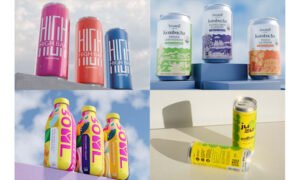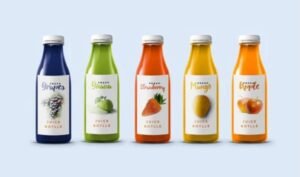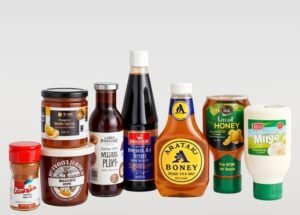
A chilled bottle leaves the fridge, sweats within two minutes, and by the time it reaches the customer the label is lifting at one corner. That single moment is why sticker labels for drinks are a materials decision, not a printing afterthought. For beverage and D2C brand owners, the label is the first thing a shopper touches and the last thing that has to survive an ice bucket. Specify the face material, adhesive, and finish correctly and the label sells the drink. Get them wrong and it curls on the shelf before anyone reads your story.
This guide covers what pressure-sensitive drink labels actually are, where they beat shrink sleeves and wrap-around film, which materials and adhesives hold up to condensation and freezers, the FSSAI declarations that must stay legible, and the artwork and MOQ realities of ordering in India.
Sticker drink labels are pressure-sensitive labels: a printed face material pre-coated with adhesive on a release liner, applied to a bottle or can with light pressure and no heat, water, or glue pot. They are the peel-and-stick format most beverage brands start with, and the reason drink bottle stickers scale so easily from a 500-unit test batch to a national run.
The construction is four layers, and each one is a spec you get to choose: the face (paper or film), the adhesive, the surface print and finish, and the liner. Most drink-label failures trace back to two of those layers being mismatched, usually a waterproof face sitting on an adhesive that was never rated for a cold, wet bottle.
Sticker labels win on flexibility, short runs, and cost, which is exactly what a growing D2C beverage brand needs. Shrink sleeves give roughly 150 percent more design space and a full 360-degree wrap that doubles as a tamper seal, and they hug contoured or waisted bottles by tightening around 60 to 75 percent in a heat tunnel, according to CTM Labeling Systems. But that heat tunnel is capital you may not want on day one, and sleeve tooling makes small runs and quick label changes expensive.
Pressure-sensitive stickers apply with simple equipment, suit flat and gently curved bottles and cans, and let you switch artwork, add a variant, or print a limited edition without new tooling. Wrap-around film sits between the two: a filmic label applied with glue at high line speeds, common in high-volume PET water and soft-drink lines. Here is how the three compare for a beverage brand.
Attribute | Sticker (pressure-sensitive) | Shrink sleeve | Wrap-around film
Design space | Front and back panels; base and lip stay clear | ~150% more; full 360-degree wrap | Full or near-full wrap
Best container shape | Flat, cylindrical, gently curved bottles and cans | Contoured, waisted, tapered, oval | High-speed cylindrical PET/glass
Cold-wet durability | Excellent with correct film + adhesive | Excellent; film shrinks tight | Good; depends on glue and film
Tamper evidence | Add a neck band or seal separately | Built in when it covers the cap | Not built in
Short runs and quick changes | Best; no tooling, easy variant swaps | Costly for small or frequent runs | Suits long, stable runs
No-label look | Yes, with clear-on-clear film | No; film is opaque or printed white | Limited
For anything that gets cold, condensed, or dunked, choose a synthetic film over paper. Polypropylene films such as BOPP and PP resist water, oil, and abrasion, and they do not absorb moisture from condensation or frost the way a paper label does. That is why Prakash Labels positions its PP (polypropylene) labels for products exposed to water and chemicals, and its polyester labels for the harshest temperature swings.
Three film choices cover most drinks. White BOPP or PP gives you a bright, printable, fully waterproof face for juices, cold brews, kombucha, and energy drinks. Clear-on-clear film delivers the premium no-label look, where the design appears printed straight onto glass or PET; Prakash’s clear-on-clear labels and clear PP are built exactly for brands that want the artwork to float on a transparent bottle. For squeezable or high-contour packs such as flavoured syrups and sports pouches, PE (polyethylene) film flexes with the container instead of wrinkling. Wet-strength coated paper or metallised PP remains an option when a craft or premium look matters and the bottle only meets ice occasionally.
This is where most drink labels quietly fail, and where custom beverage stickers earn or lose their premium. A face material can be perfectly waterproof and still peel, because the problem is not the printed film soaking through. The problem is condensation forming on a cold bottle before the adhesive has set, which prevents a standard permanent adhesive from ever gripping and produces edge lift within hours.
Match the adhesive to the coldest, wettest moment the bottle will see. A standard permanent acrylic is fine for ambient-shelf drinks that are labelled dry. Refrigerated and cold-chain drink labels need a cold-temperature or wet-apply adhesive engineered to bond to a chilled, damp surface. Freezer and deep-cold packs need a freezer-grade adhesive rated to stay put through frost and condensation. And for beer or seltzer that lives in an ice bucket, you want a film face on a wet-strength adhesive; clear BOPP constructions have held intact through four-hour ice-bucket immersion in supplier QA testing, per label-industry adhesive guidance.
Prakash’s own Paytm case study is the clearest proof of this principle: faced with labels peeling off refrigerated glass doors through sharp temperature swings, the team engineered a temperature- and peel-resistant label that held at an optimised cost. The same adhesive logic applies to your bottle. When you order adhesive labels for bottles, name the temperature and moisture conditions up front so the adhesive is chosen for them, not defaulted.
Waterproof drink labels are a stack, not a single ticked box. You need a film face that will not pulp, a moisture-rated adhesive, and a print system that will not smear when a wet hand or an ice cube drags across it. Digital and UV-cured inks are inherently water-resistant once cured. On top of that, a gloss or matte laminate, or a UV varnish, seals the ink and adds the scuff and smudge resistance a bottle needs in a cooler or a delivery box. Skip the over-laminate and even a waterproof face can scratch and ghost after a few hours on ice.
Finish is where a label stops being functional and starts being desirable. Gloss lifts colour and looks clean and hydrating, which suits juices, sodas, and sports drinks. Matte reads craft, natural, and premium, and pairs well with cold brew, kombucha, and small-batch spirits. Foil and metallic effects signal luxury on liquor and limited editions; Prakash offers silver metallised and metallic labels in gold, silver, and brushed-chrome finishes for exactly this. A practical rule for chilled drinks: whatever finish you pick, keep it as a laminate or varnish so it doubles as the waterproof top layer.
Every packaged beverage sold in India must carry the mandatory declarations, and they must stay readable after the bottle has been wet and handled. Under the FSS (Labelling and Display) Regulations, 2020, the contents of a label must be “clear, prominent, indelible and readily legible by the consumer,” with a minimum type height (3 mm for certain specified declarations), and the FSSAI logo and licence number printed in a colour that contrasts with the background.
The core list a drink label must include: product name, complete ingredient list, nutritional information, allergen declaration, net quantity, date marking, manufacturer or packer name and address, the FSSAI logo and licence number, and the veg or non-veg symbol. Indelible is the operative word for beverages. If your design floods the declaration panel across a clear film or a foil, verify contrast and that the print survives immersion, because a mandatory declaration that fades in an ice bucket is a compliance failure, not a design quirk.
Design for a curved, wet, single-second read. Build 3 mm bleed and keep critical text 3 to 4 mm inside the die line so nothing is lost on a tight bottle radius. On clear-on-clear, add a white ink layer behind any text or barcode that needs to stay opaque, or the design vanishes against a dark drink. Supply a proper dieline and, for contoured bottles, account for how the label distorts on the curve. Confirm barcodes scan on-bottle, not just on the flat proof. Ask for a physical proof on the actual film before a full run, since gloss, matte, and clear all shift colour differently from a screen.
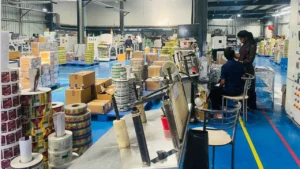
Minimum order quantity depends on the print process. Digital printing carries no plate cost, so short runs of a few hundred to a couple of thousand labels are viable, which suits pilots, variants, and seasonal editions. Flexographic printing has plate setup costs, so it becomes economical at higher volumes and lower per-unit prices. A brand running several SKUs or frequent artwork changes usually starts digital and moves selected best-sellers to flexo as volumes stabilise. With 30-plus years of beverage and food and beverage label production at its Noida plant, Prakash can advise which process fits your run length rather than pushing one MOQ.
Are sticker labels waterproof enough for bottles kept on ice?
Yes, when built correctly. A film face such as BOPP or PP, a wet-strength or freezer-grade adhesive, and a protective laminate together survive condensation and ice-bucket immersion. Paper faces with standard adhesive do not.
What is the no-label look and how is it achieved?
It is a clear-on-clear label on a transparent bottle, so the printed design appears to sit directly on the glass or PET with no visible label edge. It needs clear film, precise registration, and often a white ink base behind key elements.
Can a sticker label carry all mandatory FSSAI information?
Yes. A correctly sized pressure-sensitive label holds every mandatory declaration legibly, provided the type height, contrast, and indelibility meet the FSS (Labelling and Display) Regulations, 2020.
Sticker labels or shrink sleeves for a new drink brand?
Sticker labels, in most cases. They need no heat tunnel, suit short runs and quick artwork changes, and keep unit costs low while you test the market. Move to sleeves when you need 360-degree coverage or a built-in tamper seal at volume.
Do refrigerated and frozen drinks need different labels?
The face material can be the same film, but the adhesive should differ. Refrigerated and cold-chain drinks need a cold-apply or wet-apply adhesive; frozen products need a freezer-grade adhesive rated for frost and condensation.
Get the spec right before the first run
The brands whose labels still look sharp after a week in the cooler did one thing: they specified the adhesive and film for the coldest, wettest moment the bottle would ever face, then chose a finish that doubled as protection. That order of decisions, function first and finish second, is what separates a label that sells from one that peels. If you are launching or reformulating a drink, share your bottle type, storage temperature, and shelf conditions with the Prakash Labels food and beverage team and request a quote, and get a construction matched to your product rather than a stock guess.